|
That morning I felt defeated. My body was tired and heavy. An infection had been with me for five weeks, and the low, grey weight of it had seeped into my spirit. I knew I needed a Visual Vitamin, be restored by the nutrition of beauty. Balboa Park, I would go there! But I also knew, I needed first to stop. To enter the sanctuary of silence. To open Eternity's window before stepping into the day. So I sat in my cream leather recliner, facing the ocean — the place where I meditate and write every day.
And in that stillness, a whispered voice came. It said: Bring me my children. Let me serve my Future Human babies. Those words broke me open. I wept the kind of weeping that comes only when a hunger you had been too tired to name is suddenly named for you. I realized how much I craved to do this work in the world again — to feed the Future Human, to support this great unfolding of Higher Wisdom, conscious evolution. I did not go to the park as a defeated woman. I went as one who had just been given her instructions. Her name was Ellen. She was twenty-six, a nurse from Tennessee on a three-month assignment in our city. She was walking past me with her friend when her radiance stopped me the way beauty is always meant to stop us — as a threshold, as a summons. I turned and told her so. I told her she was radiant. And because beauty, when recognized, always opens a window, she stopped, and we began to speak. I asked her what she was letting go of in this season of her life. The cocoon question. She said she was letting go of the part of herself that got caught up in what other people thought of her, the part that tended to everyone else and forgot her connection to the Lord in the tending. Then I asked her what her butterfly was. She said she wanted to be a servant of the Lord. I felt myself filled with the exact substance I had been hungry for. I had come to feed her, and she was feeding me. I had come as elder and she had come as seeker, and within a few breaths we were sister and daughter, daughter and sister, at the same time. Then she asked if she could pray for me. We gathered in a circle, three women in the park, and she asked the Lord to heal me of the infection I had been carrying. As she prayed, I felt a warm golden strand of energy with us in the center of the circle. I knew it at once. It was the same golden thread I had seen descending from Eternity's window in the image I had been given for my own healing the day before — the thread connecting the cosmos to the elephants walking on the curve of the Earth. It had left the image and come into my body. Or perhaps it had always been there, and I had simply, at last, grown quiet enough to feel it. The night before, I had dreamed I was sitting with Jonas Salk in a stadium. Our bodies were pressed side by side. And in the moment of prayer with Ellen, I heard him speak. His words rose up in me like something remembered from long ago: To be fed in the course of feeding. There it was. The whole teaching, in a single line. Salk, who had imagined himself into the virus in order to find the vaccine — who had used his own embodied imagination as the instrument of healing — was telling me what the Living Fabric has always been telling us. The one who offers and the one who receives are not two. The hand that gives bread is nourished by the giving. The mother who pours milk is remade by the pouring. The hunger and the feeding are the same motion. This is the secret the Future Human carries. Not that she gives without tiring. But that in the true giving, she is filled. The window opens, the golden threads descend, and she discovers that the elephants on the Earth are not only bearing the light down — they are being crowned by it. Served in the act of serving. Fed in the act of feeding. I came home that evening no longer defeated. The infection in my body may heal on its own timeline. But something else had been healed already. Whatever part of me had wondered whether the world would still meet me when I came forward again to do this work — that part had its answer. Ellen was the answer. The golden thread was the answer. Jonas, sitting beside me in the dream and in the park, was the answer. Darling, if you are tired today, if the work feels too large and your body too small, remember: you do not have to hoist the window open by force. Sit down. Be still. The window opens by stillness, not by will. And when you walk out into your day, let beauty stop you. Let a stranger's radiance turn you around. Offer what little you have to offer. You will discover, as I did, that the substance you were hungry for is the very substance that pours through you when you feed another. This is how the Future Human is born. Not in grand acts. In a park. In a circle of three. In a golden thread nobody else can see but everybody can feel. Copyright 2026 Lisa Longworth. Excerpt from the forthcoming book: Higher Wisdom, the New Inner Technology for Human Evolution
1 Comment
Last night, watching a documentary on Henry David Thoreau, I felt something inside me grow quiet — not empty, but clarified. As if a deeper listening came forward and everything else stepped back.
He went to the woods, he said, to live deliberately. I recognize that movement in my own life now. Not the woods themselves — but the same turn inward. Away from performance. Away from the subtle pressure to produce, to prove, to keep pace with an external rhythm that was never truly mine. And toward something far more intimate, far more exacting: the signal. I feel how easily I am pulled from it. A plan, a thought, an expectation — and suddenly I am no longer listening. I am managing. The body tightens. The field goes quiet. And I am back inside the old architecture of effort. Thoreau saw this clearly. He simplified not as aesthetic preference, but as a way to hear. To reduce the noise so the living world could speak again. That is what I am learning now. To live simply enough that I can perceive. To write not from what I think I know, but from what is actually arising. There is a different quality to this kind of writing. It doesn’t strain. It doesn’t reach. It arrives — sometimes slowly, sometimes in a rush — always carrying that unmistakable sense of rightness, as if the words already exist somewhere within the living fabric and I am simply allowing them through. This is creativity as I have come to understand it: not production, not expression, but reception. The nervous system, attuned and unhurried, becoming a finely calibrated instrument — open to what wants to emerge from the field itself. It requires a surrender that is not passive. It is exquisitely attentive. My body becomes the place of inquiry. Is this action coherent? Is this thought aligned? Do I move now, or do I wait? These are not questions I answer intellectually. I feel into them. The answer lives in sensation — in the subtle opening or the almost imperceptible contraction, in the quiet yes, in the wordless no. This is embodiment as inner technology: the body not as instrument to be managed, but as a biological intelligence that senses truth before the mind has language for it. I imagine Thoreau at Walden Pond — not as a figure of the past, but as someone touching the same field I am touching now. The pond reflecting light. The air carrying the smallest shifts of season. His attention refining itself, day by day. He was training his perception. Learning to listen without distortion. This is intuition in its most fundamental form — not mystical insight, but high-speed pattern recognition, calibrated by stillness, undistorted by urgency. What he was developing at Walden was not a philosophy. It was a nervous system practice. And I see how his listening did not end with him. It moved. It shaped Mahatma Gandhi. It shaped Martin Luther King Jr. — not because Thoreau told them what to do, but because he demonstrated what it means to live from an inner authority that does not betray what it senses as true. That lineage is not historical to me. It is alive. It is here, in the smallest choices of my day: when I pause instead of push, when I rest because the body is tired even if the mind insists there is more to do, when I follow the subtle thread of what is calling rather than forcing a direction. I begin to understand that simplicity is not about having less. It is about interfering less. Less noise. Less override. Less performance. So that something far more intelligent can begin to organize life from within — what Jonas Salk might have called the deeper biological wisdom of the organism, orienting toward coherence rather than optimizing for output. Machines optimize. Humans orient. That distinction has become the center of everything I am writing. He went to the woods to hear life more clearly. I am learning to hear it here — in this body, in this moment, in the quiet living signal that is always, already speaking. Copyright 2026 Lisa Longworth. Excerpt from the forthcoming book: Higher Wisdom, the New Inner Technology for Human Evolution What I once named spiritual, I now experience as biological. My body is not fixed. It is responsive. Shaped by every environment I inhabit, every relationship I enter, every perception that moves through me.
Epigenetics is the science of how experience shapes which genes are expressed—without changing the DNA itself. I have come to know it as the body's listening: life continuously influencing which parts of me come forward, and which remain dormant. I can feel how my system once organized around protection—bracing, anticipating, narrowing to a sliver of what was possible. These were not failures. They were intelligent adaptations, precisely calibrated to what my nervous system believed was true. For most of my life, I operated from performance: producing, achieving, unconsciously measuring my worth against output. But the body was never asking to be managed. It was asking to be heard. When I began to genuinely listen. To not override, not optimize, but receive and orient myself towards it. Something shifted at a level beneath intention. I moved from performance to signal. From doing to sensing. And in that movement, a different kind of intelligence became available. Through attention, safety, slowness, and coherent relationship, my body began to reorganize itself. Not through force. Through signal. I could sense it happening. Stress chemistry recalibrating. The nervous system moving from protection into participation. Tension releasing at the cellular level, perception widening, space opening where there had only been contraction and reaction. What once moved automatically became something I could feel, track, and—over time—choose. This is what I call epigenetic unfolding: the body re-opening to a fuller range of its own life. And yet something more than adaptation is happening here. This unfolding is not random. It has direction—toward coherence, toward vitality, toward connection. It feels as though my biology is not merely adjusting to circumstance but orienting, guided by an intelligence already present in life itself, preceding my understanding of it. Embodiment, as inner technology, begins here: in the willingness to let the body be a source—not a system to be managed, but a living field of evolutionary intelligence, already knowing more than the mind has caught up to. What we call awakening is, in part, the body learning to express more of what it already knows. Copyright 2026 Lisa Longworth. Excerpt from the forthcoming book: Higher Wisdom, the New Inner Technology for Human Evolution Online dating is a strange frontier — small glowing frames attempting to contain a living soul. Most of it flickers and disappears. And then, occasionally, someone real steps through. I recently met a man I’m “slow burn” dating. The chemistry is strong — unmistakable — and we haven’t gone very far yet. That restraint is the heat. Curiosity. Laughter. A recognition felt in the body first — in breath slowing, in skin warming, in the quiet pull to lean closer. It began with a simple coffee two weeks ago, and the spark has only intensified. Something unexpected followed. When I returned to lifting weights at the gym — rebuilding strength after a long season of healing — my imagination began waking up alongside my muscles. As I push the machine and feel the burn in my shoulders and legs, I imagine our bodies meeting — muscle to muscle, sweat on skin, erotic and electric. The effort turns delicious. The heat between us mirrors the heat in my muscles. Instead of distracting me, the imagery deepens the workout. The repetition becomes rhythmic. Effort becomes relational. My body feels less like a project to fix and more like a participant in life. Neuroscience offers a quiet affirmation: the brain does not sharply divide vivid imagination from lived experience. When we imagine connection, motor circuits, emotional centers, and reward pathways light up together. Dopamine rises. Attention sharpens. Muscles receive a clearer signal. Effort carries meaning. In other words: imagination recruits biology. In my book, Higher Wisdom: The New Inner Technology of Human Evolution, I write that imagination is not escape. It is rehearsal. It is the brain’s evolutionary design studio — allowing us to experience possible futures and begin wiring toward them. When imagination is infused with joy and safety, it becomes an organizing force. At the gym, my body is not just rebuilding strength. It is practicing participation. It is pairing exertion with pleasure. It is teaching my nervous system that vitality and intimacy can coexist. The same way our conversations move — thought meeting thought, question meeting question — my muscles meet resistance. There is dialogue here too. Push. Respond. Listen. Adjust. Growth happens in that exchange. This feels essential after illness, after loss, after seasons of contraction. The slow burn of dating mirrors the slow build of muscle. Both require consistency. Both require patience. Neither responds well to force. Here is the quiet revelation: When imagination aligns with desire — not as escape, but as embodied rehearsal — the body listens. The weights feel lighter. The burn feels purposeful. The future feels less abstract. Sometimes love begins in the nervous system. And sometimes it shows up in the middle of a leg press. Copyright 2026 Lisa Longworth. Excerpt from the forthcoming book: Higher Wisdom, the New Inner Technology for Human Evolution I am wired for belonging. Even in third grade, my nervous system was scanning for it.
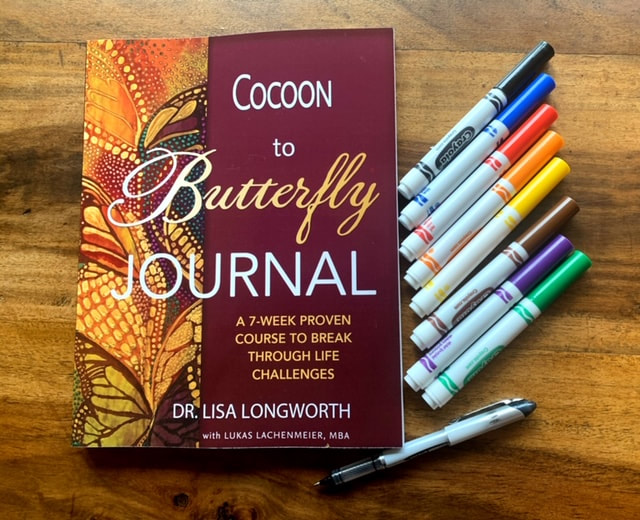
In Miss Marigold’s class at Grant Elementary, a solar system mobile hung from the ceiling. Jupiter was enormous. The other planets hovered in proportion, suspended in quiet orbit. I don’t remember the sun. I remember the relationships. One by one, students stood at the chalkboard to give their planetary book reports. Flat voices. Stuttering. Rushing. The class drifted — eyes glazed, bodies slumped, attention scattered. The field felt wrong. Disconnected. Bored. Shut down. Almost painful. No one was meeting anyone. I remember thinking: Is anyone learning anything? But beneath that: Why does this feel so empty? My anterior cingulate cortex — the brain’s register of social pain — was likely firing. Disconnection hurts. I did not tolerate relational dead space well. I wanted coherence. Aliveness. Contact. At home on Bandini Street, I had been in the garage playing with aluminum foil, making a crown. I owned white go-go boots. Suddenly, a vision flashed: I could be Venus. Wrap the boots. Wrap my body. Wear the crown. Speak in the first person as if my spaceship had just landed. I would not read about a planet. I would be the planet. This was pattern detection in action. My brain solving a problem: how to turn a disconnected room into connection. I told Miss Marigold and asked to change in the cloakroom. She gave a thumbs up. Five minutes before my turn, she nodded. “We have a special guest,” she announced. “She has just arrived from her spaceship and will tell us about her planet, Venus.” She gave my idea space. My mother had given me the deeper gift long before — she always said yes to my creativity. That yes lived inside me. When I stepped out in foil, the class erupted in laughter. Not mocking. Alive. Energy surged. The room woke up. I felt joy — and something steadier underneath it. I spoke slowly. Deliberately. As Venus. The classroom quieted, leaned in, absorbed. For the first time, the field cohered. That moment reveals something essential about Collective Belonging Patterns. The child in me did not crave approval. She craved connection. When she sensed disconnection, her nervous system mobilized creativity to repair it. Imagination was not escape. It was regulation. Attachment intelligence. But another layer formed beneath it: To belong, I must elevate the field. I must bring energy. I must be exceptional. Dopamine reinforced the circuit. Applause wired into identity. Neurons that fired together wired together. Belonging fused with brilliance. Achievement became attachment. Innovation became safety. This is how Collective Belonging Patterns form. They recruit our gifts for survival. Nothing pathological. Exquisite nervous-system intelligence. But development does not end there. At some point, the question shifts from: “How do I generate belonging?” to “Who am I when I am not generating it?” This shift has only taken place for me in the last year. Neuroplasticity makes that shift possible. Perform repeatedly for connection, and that circuit strengthens. Rest inside connection without performance, and a new circuit forms. Allow love without transforming the field, and attachment uncouples from effort. The Venus costume was not proof of alien origin. It was proof my brain could sense relational incoherence and reorganize it through imagination. As a child, I translated difference into destiny. Encoded otherness as stardust lineage. Not delusion. Protection. A brilliant solution to belonging. Now, finally in my mid-sixities, I no longer need performance to secure love. I can inhabit difference without dramatizing it. Belonging, at its most evolved, is not fusion. It is coherence within connection. The third-grade girl who landed from Venus was not escaping the human field. She was teaching it how to come alive. I am grateful, as an artist, to keep writing and evolving my own Higher Wisdom — one story at a time. Copyright 2026 Lisa Longworth. Excerpt from the forthcoming book: Higher Wisdom, the New Inner Technology for Human Evolution In Cocoon to Butterfly, I wrote that life thinks everywhere alike. I did not mean it poetically. I meant it biologically, architecturally.
Yesterday, in a film at the Natural History Museum, I watched a spider lift her abdomen and release a single silken filament into the air. She did not leap. She did not strain. She waited. The thread caught an invisible current—and suddenly she was airborne, rising into open sky. I later learned spiders can ascend nearly 2,000 feet and were among the first living beings to reach the Galápagos Islands more than two million years ago. A body no larger than my fingernail, carried by atmosphere into evolutionary history. As I watched, something in me recognized the pattern. The spider does not conquer new land. She entrains to field conditions. She senses thermals, electrostatic charge, wind gradients. Her silk becomes both tether and sail. A filament of protein becomes a vehicle for migration. My imagination works the same way. When I imagine, I am not escaping my life. I am releasing a filament into possibility. I extend a thread of attention into what does not yet exist. Most threads dissolve. Some drift without traction. But occasionally one catches an unseen current—and I feel the lift. A new idea reorganizes my inner landscape. A new chapter opens. A new identity stabilizes. Life thinks everywhere alike. The spider’s silk and my neural networks share a logic: extend, sense, attach, reorganize. When I imagine, synapses fire in new constellations. My brain rehearses futures before they become real. In that sense, imagination is biological ballooning—an evolutionary strategy encoded in consciousness itself. I do not always climb toward change. Sometimes I am carried. The map is not drawn on paper. It is written in wind. The metaphor is silk. The mirror is my own nervous system learning to trust the current. Imagination is how I travel into new land before my feet ever touch it. In the upcoming book: Higher Wisdom, the New Inner Technology for Human Evolution, Chapter 6, Maps, Mirrors and Metaphors. Dr Lisa Longworth Copyright 2026 A Teaching Story About the Moment the Body Knows Before the Mind Does This morning began as mornings do — with intention. I was going to the gym first, then straight to my former husband’s home to paint. He hosts the art studio where I work, and tomorrow is his birthday. I had everything prepared: workout bag, the specific paints I needed for the piece I was working on, and a box of cards I planned to sort through to find something meaningful to give him. A former husband’s birthday. The tenderness of that combination was already moving beneath the surface of my awareness. I just didn’t know it yet. When I had everything gathered, I went to lock the door and leave. And then it happened — that unmistakable signal. A flicker. A hesitation in the body. Something I had forgotten. I went back inside. I looked around carefully. Nothing was obviously missing. Everything seemed to be in order. I locked the door again and left. I drove to the gym. I worked out. And it was only afterward, pulling into his driveway, that I realized: the box of paints was not in the car. I searched everywhere. It wasn’t there. I drove all the way home. Back in my house, I looked around again and could not find it. I knew something very unconscious had happened. I don’t tend to forget things. When I do, there is usually a reason — some competing current running underneath, pulling attention in a direction I am not fully tracking. I stood still for a moment and let myself feel into the question: What went unconscious? And then I found it. The box of paints — my paints, my work, the thing I had packed deliberately for myself — had been quietly tucked away in the corner, next to the jars of brushes, hidden from sight. Not lost. Hidden. I had put it there myself. Without knowing I had done it. Here is what I believe happened. When I sat down to go through the box of birthday cards, something familiar activated. Not a thought — a pattern. An old neural groove worn smooth over years of marriage, of caretaking, of placing another person’s needs at the center while my own quietly moved to the periphery. I began thinking beyond the card — what else could I give him? What more could I do? The familiar circuitry of over-giving lit up, and in that moment, my own creative work — my paints, my painting, my afternoon — disappeared from awareness. Not metaphorically. Literally. My hands had moved the box of paints out of sight while my mind was already busy tending to someone else. Out of sight. Out of mind. Out of self. But here is the part that moves me most. My body knew. Standing at the locked door, ready to walk into my day, something in my nervous system sent up a signal. Not language. Not logic. A felt sense of incompletion — a quiet alarm that something essential had been left behind. I went back inside. I looked. My conscious mind could not see what my body already knew. This is what predictive processing researchers describe as the body’s anticipatory intelligence — the nervous system modeling reality ahead of conscious awareness, flagging discrepancies before the thinking mind catches up. The signal was accurate. I had forgotten something. It just wasn’t a thing. It was myself. This is what I mean when I say Higher Wisdom is the work of making the unconscious conscious. Old patterns do not announce themselves. They operate beneath the threshold of attention, moving through familiar grooves laid down long before we had words for what was happening. The pattern that shaped itself around my former marriage — the over-giving, the self-erasure that didn’t feel like self-erasure because it felt like love — that pattern did not disappear when the marriage ended. It went underground. And this morning, activated by a birthday, by the tenderness of wanting to give something meaningful to someone I once shared a life with, it surfaced again. Quietly. Efficiently. Automatically. My hands hid my paints before my mind knew what my hands were doing. The gift in this story is not the inconvenience — the wasted drive, the lost afternoon hours. The gift is the visibility. The moment of return: standing in my house, looking at the box of paints tucked silently in the corner, and knowing with absolute clarity what had happened and why. This is how evolutionary learning actually works. Not through dramatic insight or willful intention, but through precise, humble moments of self-witnessing. The nervous system offers a signal. We follow it. We look. We find what we could not see while we were still inside the pattern. I retrieved my paints. I drove to his home. I painted. And I brought him a card — just a card, warm and sufficient — and felt no pull to do more. Becoming conscious is rarely cinematic. It is usually this small: a hesitation at a locked door, a missing box, a corner you would not have looked in if the body hadn’t whispered that something was hidden. Higher Wisdom begins in exactly these moments — when we are willing to go back inside and look for what we left behind. Copyright 2025 Lisa Longworth. Excerpt from the forthcoming book: Higher Wisdom, the New Inner Technology for Human Evolution Three days ago, something subtle and astonishing happened. I didn’t put my contact lens in, and without thinking much of it, I opened my computer and began to read. A few moments passed before I realized—I could see clearly. Not just vaguely, not straining or compensating, but reading with ease both up close and on the screen. There was no effort, no reaching. Just a quiet, direct clarity. And as I paused, I recognized that nothing external had changed. What had shifted was internal. I had been resting in a deeper practice—letting go of future projections in my relationships, releasing the habitual pull to anticipate or manage what comes next, and instead listening for a more immediate, embodied signal to guide me moment by moment.
In that state, something in my system softened. The usual tension I didn’t even know I was holding—subtle, constant, anticipatory—was gone. And with it, perception itself seemed to reorganize. It felt as if seeing was no longer something I had to do, but something I could simply receive. I don’t know if this change will last, and that’s not the point. What feels true is this: when I release the future and return to presence, the body comes into coherence—and in that coherence, even my vision reflects a different order. And now, as if to deepen the mystery, I’ve noticed another shift—this time in my hearing. Over the past week, birdsong has moved from background texture to foreground presence. Walking through Torrey Pines, or standing in my front yard above the ocean in Del Mar, the sound of birds has become almost shockingly vivid—clear, layered, alive. It’s as if a dial has been turned up, not in the environment, but within my own perception. I’ve even begun using Merlin Bird ID to identify the songs, matching sound to species, deepening the intimacy of the experience. What was once ambient is now articulate, relational, alive with detail. And then today—an unexpected, humbling, and honestly hilarious twist. After visiting urgent care, I discovered that I had, quite simply, put my contact lens in the wrong eye. I wear one lens for close-up vision and the other for distance, and somehow I had reversed them. The clarity I experienced was real—but the explanation I gave it was not. And suddenly, the lesson deepened. Because Higher Wisdom is not just about sensing more—it’s about interpreting less. It’s about staying close to direct experience while holding our stories lightly. The body can come into coherence. Perception can open. Vision can feel effortless. And still, the mind can rush in to assign meaning, to construct a narrative that feels true but isn’t quite accurate. What remains true is this: something in me did shift. The letting go, the listening, the return to presence—that is real. The clarity I felt in my body, in my perception, in my relationship to the moment—that is real. But this experience reminds me that clarity of perception and clarity of interpretation are not always the same. The reality was simple and almost comical: I was seeing clearly through the “wrong” eye. Perhaps this is the deeper invitation: to trust the signal, but stay humble with the story. To allow the body to lead, perception to open, and meaning to arise slowly, gently, without grasping. Because sometimes, even when we are seeing clearly… we are still learning how to understand what we see. Copyright 2025 Lisa Longworth. Excerpt from the forthcoming book: Higher Wisdom, the New Inner Technology for Human Evolution There was a time when my life moved outward—vision forward, momentum building, a horizon filled with possibility. I was stewarding a global project called TOGETHER through my nonprofit, the International Creativity Foundation. Designed as a living experiment in connection, creativity, and collective evolution. An offering to the future.
And then my body stopped me. Long Covid did not feel like an interruption. It felt like a turning. Not away from the work—but into its source. The scale of my life collapsed inward. The global became cellular. The future became this breath. And it was there, in that quiet narrowing, that something unexpected emerged. An inner technology so simple it almost felt like a child’s game. May I? ¹. At first, just a whisper inward before action. May I get up now? May I write? May I make coffee? My body responded. Not in words—in signals. A soft opening. A contraction. A sense of alignment—or its absence. Not mental. Not conceptual. Immediate. Biological. Intelligent. It reminded me of the childhood game Mother, May I? Where movement only happened after permission was granted. But this was not obedience. It was relationship. I was no longer directing my life from the mind alone. I was listening. May I? became a threshold. A pause that opened perception. Within that pause, I began to feel what I call the yes current—a subtle but unmistakable movement of coherence. When the answer was yes, there was flow. When it was no—density, hesitation, quiet closure. Over time, this became my way of navigating. I would wake before dawn, sit in silence, and wait. Not for ideas. For signal. Writing no longer came from effort. It came from alignment. Even the smallest actions—standing, eating, reaching for a pen—entered a continuous dialogue. May I? This question reorganized my relationship to will. Many traditions speak this as Thy will be done. ² But here, it was not surrender to something outside. It was intimate attunement to something within—and around me—at once. A living field of intelligence expressing through my body. All of me was included. Rational mind. Witnessing awareness. Emotional body. None rejected. None in charge alone. The guidance came from coherence. From listening. From the body as instrument. As I lived this way more fully, something in my identity shifted. I no longer experienced myself as a fixed self moving through a world of objects. I experienced myself as participation. A listening presence. A node in the Living Fabric. And I began to understand: this is what TOGETHER had always been about. Not a project to build. But a field to enter. A way of being where we are no longer separate actors optimizing outcomes—but conscious participants in a living Theater of Consciousness. At once the instrument, the music, and the awareness in which the entire play is revealed. To live this way is to create differently. Not from force—but from attunement. Not from ambition—but from alignment. This is my evolutionary creativity. This is what it means, for me, to be an Evolutionary Artist. I am not here to impose my will upon the world. I am here to listen for where life is already moving—and to join it. May I? And when the answer comes—I follow. Notes ¹ The Potawatomi tradition articulates this same gesture through what Robin Wall Kimmerer calls the Honorable Harvest: Ask permission before taking. Abide by the answer. That this inquiry arose independently—from illness, from the body’s refusal to be overridden—before encountering Kimmerer’s work suggests it belongs to a deeper biological grammar, not a borrowed practice. The convergence is its own confirmation. ² This gesture moves through many streams. Rumi’s Sufism opens its entire masterwork with the single word Listen. Taoism’s wu wei describes effortless action aligned with the Tao’s movement—not passivity, but precise attunement to what is already flowing. Buddhist somatic practice locates awakening in the body’s field of experience, prior to thought. That the same turning appears across traditions, in cultures with no contact with one another, suggests it is not cultural inheritance but biological necessity—what the nervous system discovers when it stops overriding and begins to receive. Copyright 2025 Lisa Longworth. Excerpt from the forthcoming book: Higher Wisdom, the New Inner Technology for Human Evolution |
Archives
April 2026
Categories |